
Backing local and iwi businesses to strengthen social housing in Porirua

Keeping investment in Porirua was not an afterthought in the renovation of Porirua Whānau Centre’s social houses, it was the starting point.
When the Whānau Centre began upgrading its 60-year-old Tremewan St homes, the focus was not only on improving the houses themselves, but on strengthening the local economy at the same time.
For a kaupapa Māori organisation, that meant making deliberate choices about who would carry out the work.
“The Māori side of things is because we’re a kaupapa Māori organisation, so we want to support Māori businesses,” says Whānau Centre Housing Manager Kathleen Filo.
“And local is because it’s important for our circular economy.”
The aim was to ensure high-quality work while keeping investment within the region, so contracts were awarded to iwi, Māori-owned and local Porirua businesses, alongside local builders, sparkies, plumbers and suppliers.
That meant the project was delivered by people who live and work in our own neighbourhoods, such as Pai Whenua, Hunter Construction, Gray Plumbing, BG Decorating, Duncan Plastering, Kinetic Electrical, alongside other local contractors who brought care and pride to every stage of the build.
Their involvement ensured the investment remained close to home, supporting jobs and strengthening capability within Porirua.
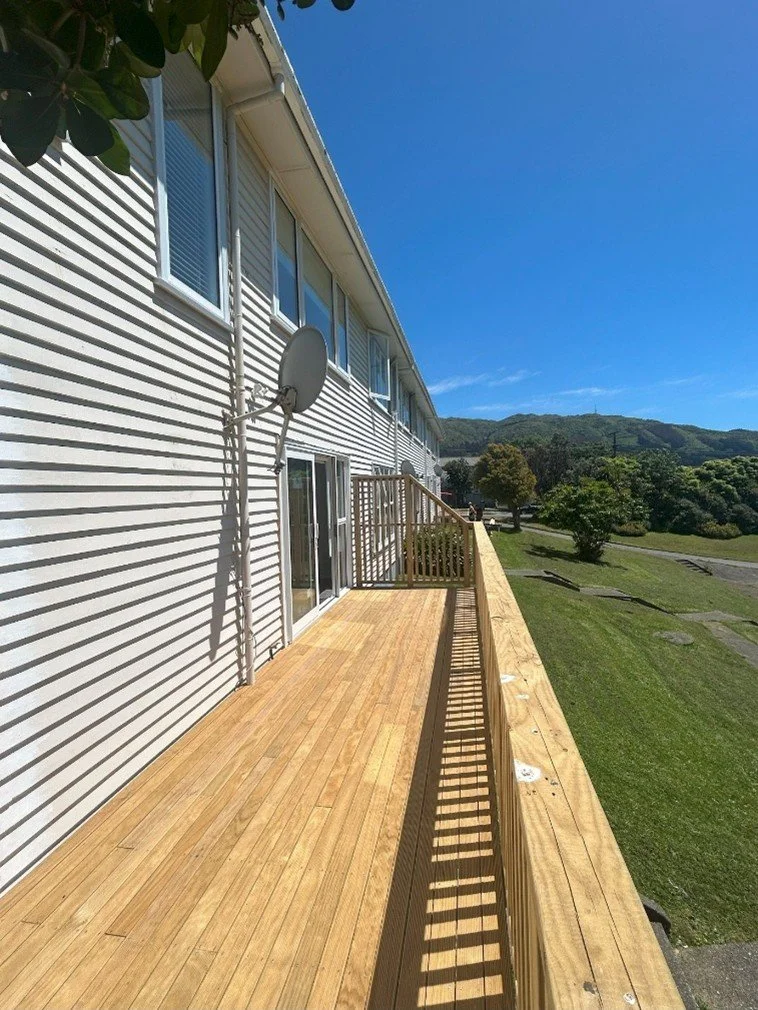
The result was a renovation project that did more than modernise housing. It kept money circulating within the city.
Local trades employed local workers. Suppliers sourced materials through nearby networks. The benefits rippled outward, Kathleen says.
“There’s more money in our city that just keeps going around, and it means more prosperity for our local economy.”
The renovations themselves were extensive. Built in the 1960s, the homes were solid but in need of renewal.
Interiors were stripped back and rebuilt from the inside out. New kitchens and bathrooms were installed. Modern fixtures replaced worn fittings. Heat pumps were upgraded to improve comfort year-round.
“Pretty much the inside was fully renovated, like a shell, and then built back up from there.”
But for the Whānau Centre, bricks and mortar are only part of the story.
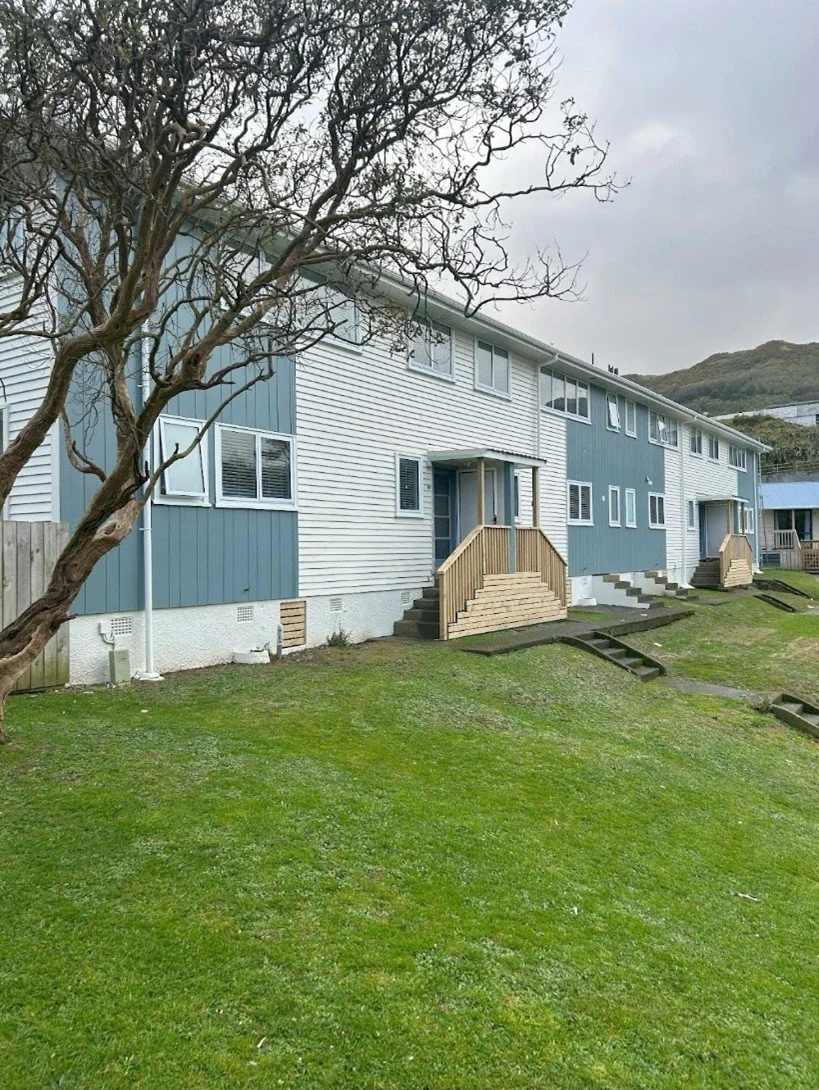
Social housing is about creating stability for whānau while also modelling an approach to development grounded in manaakitanga and collective wellbeing.
By backing local and iwi businesses, the Whānau Centre is investing in the same community it serves. In tougher economic times, that choice carries weight.
And strong communities are built when we support one another, Kathleen says.